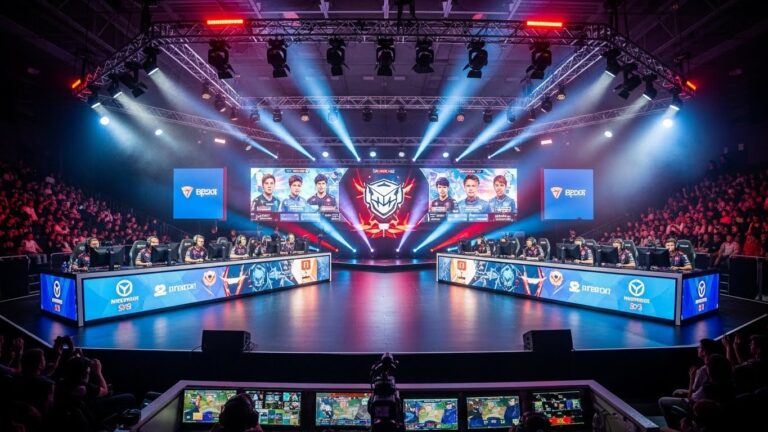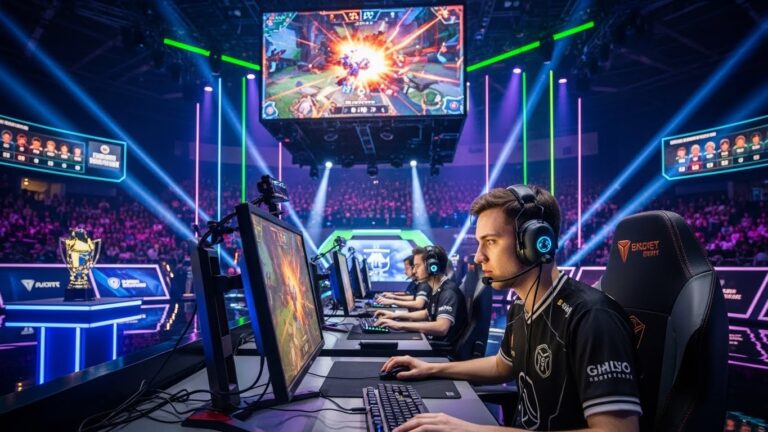
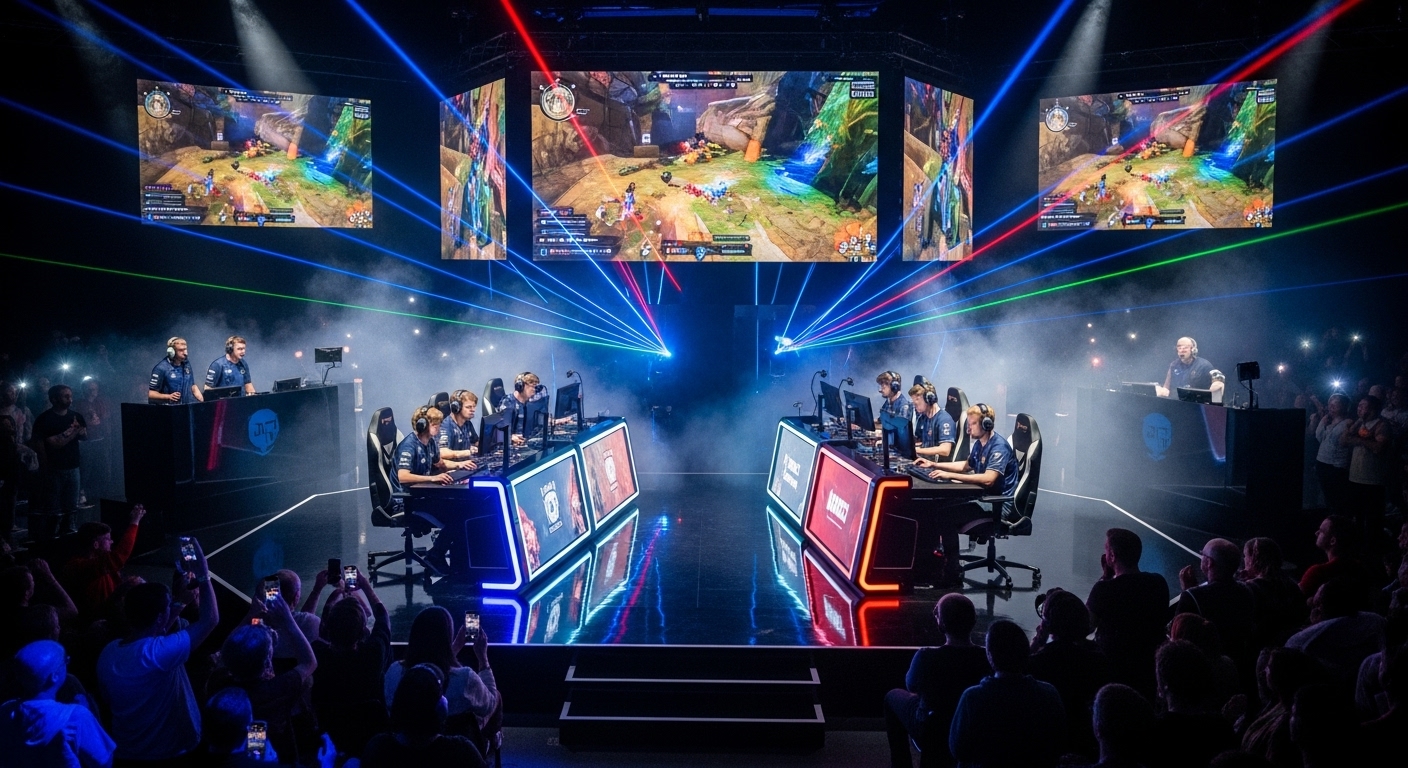
In today’s digital era, one of the most exciting and transformative developments in the entertainment industry is the rise of esports. What began as friendly competitions among gamers has evolved into a global cultural movement that blends technology, entertainment, and athleticism in a way no one could have imagined a few decades ago. Esports, short for electronic sports, refers to organized video game competitions, often played professionally and watched by millions of fans worldwide. This new form of competition is rewriting the rules of sports, inspiring a new generation of digital athletes, and shaping the future of how we perceive entertainment, teamwork, and technology.
The Origins of Esports: From Arcade Machines to Global Arenas
The story of esports begins in the early days of video gaming during the 1970s and 1980s. The concept of competitive gaming first took shape in arcade halls, where players would compete for the highest scores on games like Space Invaders and Pac-Man. These simple yet addictive games brought people together and laid the foundation for organized gaming competitions.
However, it was the 1990s that truly marked the beginning of esports as we know it. The rise of personal computers and the introduction of multiplayer gaming gave players the opportunity to compete in real time. Titles like Quake, Counter-Strike, and StarCraft helped create the first generation of competitive gamers and fan communities. Tournaments began to emerge, sometimes sponsored by gaming companies or local communities.
The real transformation occurred with the advent of the internet. Online connectivity eliminated geographical boundaries, allowing players from around the world to compete directly with each other. This digital connectivity set the stage for the global esports industry we see today, turning what was once a hobby into a professional and highly organized sport.
The Rise of Professional Gaming: When Play Became a Career
One of the most fascinating aspects of esports is how it turned gaming—a pastime once seen as purely recreational—into a professional career path. Today’s professional gamers train for hours every day, analyzing strategies, studying opponents, and refining their reflexes. Many players are now under contract with esports organizations that provide coaching, nutrition guidance, mental health support, and even team housing.
This professionalization mirrors traditional sports in many ways. Players practice teamwork, discipline, and communication, while organizations operate like sports franchises. They have managers, sponsors, training facilities, and fan bases. The world’s top players can earn millions of dollars annually through tournament winnings, sponsorships, streaming, and endorsements.
In South Korea, often called the birthplace of modern esports, professional gamers are treated with the same level of respect as traditional athletes. Television networks broadcast matches, fans fill stadiums, and young aspiring players train in gaming academies. What began as a niche community has now become a respected and legitimate global industry.
The Games That Defined the Esports Era
Esports is not confined to a single type of game or platform—it spans across genres, each with its own fan base and competitive ecosystem. A few key titles, however, have defined the esports landscape.
League of Legends has arguably become the biggest and most influential esports title in the world. Developed by Riot Games, it has built a massive professional circuit that culminates in the League of Legends World Championship, where teams from all continents compete for millions in prize money.
Dota 2 stands as another titan in the esports industry, known for its complexity and strategy. Its annual tournament, The International, consistently boasts some of the largest prize pools in esports history, funded largely by its dedicated player base.
Counter-Strike: Global Offensive (CS:GO) has been a staple in competitive gaming for more than two decades. Its simple yet highly skill-based gameplay makes it a favorite among fans of first-person shooters.
Other games like Valorant, Fortnite, Call of Duty, Overwatch, and Rocket League have also made massive contributions to the growth of esports, each offering its unique gameplay style and audience appeal. What unites all these titles is the shared passion of their communities and the drive of their players to compete at the highest level.
The Impact of Streaming and Digital Platforms
A crucial factor in the global explosion of esports has been the rise of streaming platforms. Before the era of live streaming, only those attending tournaments could witness competitive gaming firsthand. But streaming technology revolutionized that. Now, fans around the world can watch their favorite players and teams compete live, creating a level of accessibility unmatched by traditional sports.
Streaming has also given birth to a new kind of celebrity: the gaming influencer. Players who stream their gameplay attract millions of followers, turning their personal channels into entertainment hubs. This has blurred the line between professional competition and casual content creation, as top players often build massive online audiences while competing at the highest levels.
In addition, live chat features and real-time interactions have made esports more engaging than traditional broadcasting. Fans don’t just watch; they participate—discussing plays, cheering for teams, and even contributing financially through donations and subscriptions. The community-driven nature of esports is one of the key reasons for its continued success.
Global Expansion: Esports as a Worldwide Movement
Esports is no longer confined to specific regions—it has become a truly global phenomenon. While South Korea, China, and the United States have been leaders in the esports revolution, other countries have also embraced it with enthusiasm. Europe, Southeast Asia, and even regions like Latin America and Africa are witnessing a rapid rise in esports participation and viewership.
In countries like China, esports has become a national obsession. Massive arenas host tournaments that draw crowds comparable to traditional sporting events. In Europe, professional leagues and academies have been established to nurture young talent. Even in regions where internet access was once limited, mobile esports has brought gaming competitions to millions of new players.
This global expansion is supported by increasing investment from governments and corporations. Many educational institutions now offer esports programs and scholarships, recognizing the opportunities the industry presents. Meanwhile, traditional sports teams and celebrities are investing in esports organizations, further bridging the gap between the digital and physical sports worlds.
The Economics of Esports: A Billion-Dollar Industry
Esports has grown into one of the most financially successful segments of the entertainment industry. Its economic ecosystem includes sponsorships, advertising, merchandise, event tickets, and broadcasting rights. Major corporations have realized that esports provides a powerful way to reach younger, tech-savvy audiences who are less likely to engage with traditional media.
Brands across various industries—from technology companies and energy drinks to clothing and automotive manufacturers—are partnering with esports teams and events. Sponsorship deals, in particular, form the backbone of the industry’s revenue. Meanwhile, prize pools continue to grow, with some tournaments offering payouts comparable to traditional sports championships.
In addition to financial success, esports has created countless career opportunities. Beyond professional players, there are roles for coaches, analysts, commentators, event organizers, and digital marketers. This expanding ecosystem demonstrates that esports is not just a trend but a sustainable and evolving industry.
Challenges Facing the Esports Industry
Despite its tremendous growth, esports still faces several challenges. One major issue is maintaining player well-being. The intense training schedules and mental pressure can lead to burnout at a young age, as many players retire before reaching 30. Organizations are beginning to address this by implementing better health management and rest periods.
Another challenge lies in ensuring fairness and integrity. As esports operates in a digital environment, cheating and match-fixing have been persistent concerns. Developers and tournament organizers continue to invest in anti-cheat systems and stricter regulations to preserve competitive integrity.
The industry also faces challenges regarding inclusivity and diversity. While esports has a massive global following, women and minority players remain underrepresented. However, growing awareness and initiatives are helping create a more inclusive space for all aspiring gamers.
The Future of Esports: Innovation and Integration
The future of esports looks incredibly promising. As technology continues to advance, new forms of competition and entertainment will emerge. Virtual reality and augmented reality are expected to bring even more immersive experiences, transforming how players interact with games and how audiences engage with competitions.
The introduction of faster internet speeds and 5G technology will further enhance online gameplay, eliminating lag and opening up new opportunities for mobile esports. As more games are developed with competitive play in mind, the esports ecosystem will continue to expand, reaching new audiences across the globe.
Educational institutions and governments are also recognizing esports as a legitimate career path. Universities around the world now offer degrees in game design, esports management, and digital marketing, preparing the next generation of professionals for this growing industry.
Conclusion: A New Era of Competition and Entertainment
Esports represents more than just a new form of gaming—it symbolizes the evolution of entertainment in the digital age. It combines competition, creativity, technology, and community in a way that transcends traditional boundaries. What began as friendly gaming competitions has grown into a worldwide industry that attracts millions of players and fans alike.
As we move forward, esports will continue to shape global culture, redefine the meaning of sports, and inspire future generations to explore the limitless potential of digital competition. The rise of esports is a testament to how technology can bring people together, not just to play, but to celebrate skill, strategy, and passion on a global stage. The future of sports is digital, and esports is leading the way.
About the Author