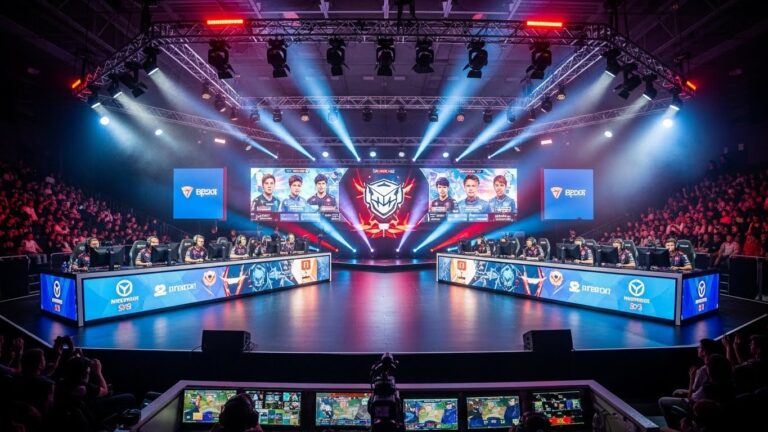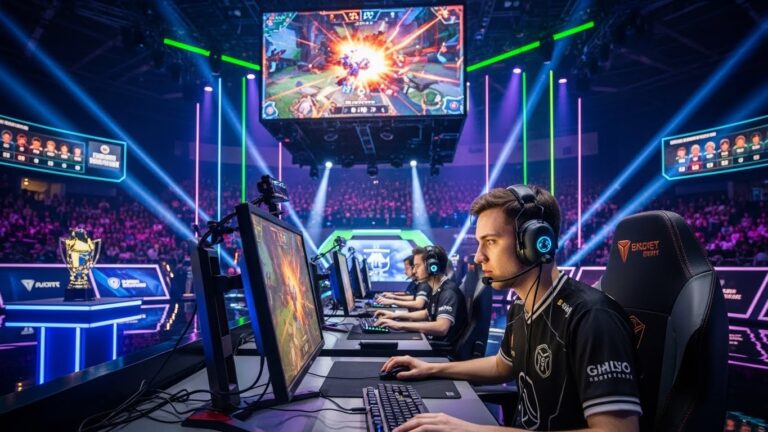
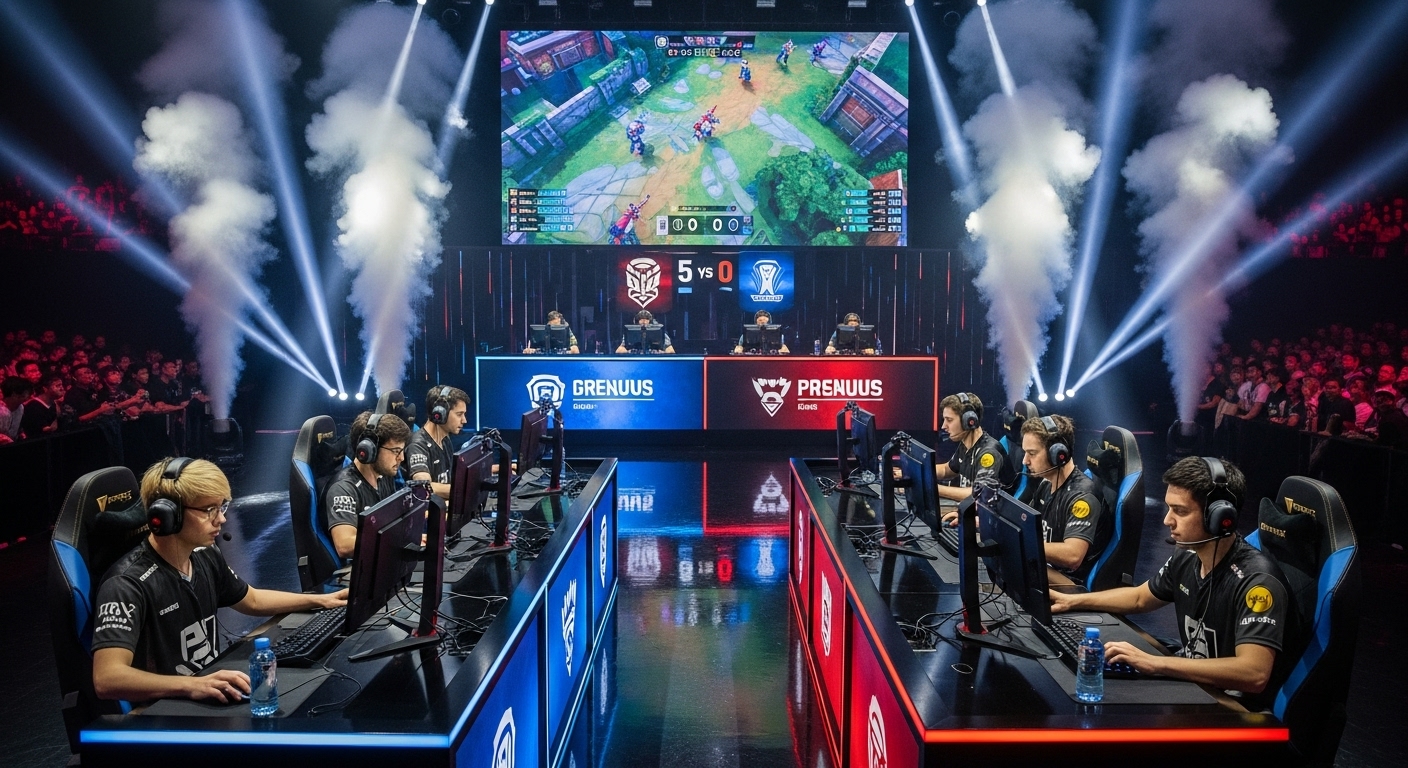
Over the past two decades, competitive gaming, commonly referred to as eSports, has evolved from a niche hobby into a global entertainment powerhouse. Once considered a hobby for a small group of dedicated gamers, eSports now boasts millions of viewers, lucrative prize pools, and a professional ecosystem that rivals traditional sports. As eSports continues to expand its reach and influence, it is transforming the way we think about competition, entertainment, and community. In this blog post, we’ll explore the rise of eSports, its current state, the factors contributing to its success, and what the future holds for this dynamic industry.
The Beginnings of eSports: A Gaming Revolution
The origins of eSports can be traced back to the early days of gaming, when players competed in local, small-scale tournaments. Competitive gaming began in the 1970s with games like Spacewar, one of the first video games to feature a competitive element. However, it wasn’t until the 1990s that competitive gaming began to take shape in a way that we would recognize today.
The emergence of online multiplayer games, such as Quake and StarCraft, laid the foundation for what would eventually become eSports. These games were designed to be played over the internet, allowing players to face off against others around the world. This new level of connectivity opened the door for larger competitions, and the first major eSports tournaments started to gain attention in the late 1990s and early 2000s.
In 1997, the Red Annihilation tournament for Quake became one of the earliest examples of competitive gaming on a larger scale. While the tournament had a modest prize pool, it featured an innovative format and even offered a Ferrari as a grand prize for the winner. It was a small event by today’s standards, but it marked the beginning of a trend that would evolve into a multi-billion-dollar industry.
The Rise of Online Streaming and Global Connectivity
One of the pivotal factors in the growth of eSports was the advent of online streaming platforms. In 2011, Twitch was launched, providing a platform where gamers could live-stream their gameplay to audiences around the world. Twitch revolutionized the way fans engaged with eSports, offering a more interactive and immersive viewing experience than traditional media.
The ability to stream live gameplay allowed professional gamers and teams to build global audiences, attracting sponsorship deals, merchandise sales, and donations from fans. What began as a platform for hobbyists quickly grew into the go-to place for competitive gaming content. Twitch’s role in popularizing eSports cannot be overstated; it has allowed players to build personal brands and given fans the opportunity to watch and interact with their favorite gamers in real time.
In addition to Twitch, YouTube Gaming and Facebook Gaming also emerged as significant platforms for broadcasting eSports events. These platforms made eSports more accessible than ever, enabling millions of viewers to tune in to tournaments and follow their favorite teams and players. As eSports grew in popularity, the streaming community became an integral part of the eSports ecosystem, with top streamers building their careers by live-streaming their gameplay, commentating on tournaments, and engaging with fans.
The Globalization of eSports: A Worldwide Phenomenon
One of the most remarkable aspects of eSports is its global appeal. Unlike traditional sports, which are often confined to specific regions or countries, eSports is a truly international endeavor. Players, teams, and tournaments come from every corner of the world, creating a vibrant and diverse competitive scene that transcends borders.
South Korea, widely regarded as the birthplace of professional eSports, played a pivotal role in the global expansion of competitive gaming. In the early 2000s, South Korea’s government recognized the potential of eSports as both a form of entertainment and a potential economic driver. The country built dedicated eSports arenas, hosted national tournaments, and developed broadcasting infrastructure to support the industry. As a result, South Korea became home to some of the world’s most skilled eSports players and a thriving competitive gaming scene.
As the success of South Korea’s eSports scene gained attention, other countries followed suit. Major gaming events, such as the League of Legends World Championship and The International for Dota 2, now attract players and viewers from around the globe. Today, major eSports tournaments are held in cities like Los Angeles, Berlin, Seoul, and Shanghai, drawing thousands of fans to watch the action in person while millions more watch online.
This global connectivity has also allowed players from different countries to compete on equal footing, leveling the playing field and creating a diverse and competitive environment. Countries like China, the United States, and Europe have all become eSports hubs in their own right, and cross-border competition has become a hallmark of the industry. The ability to engage with players from different cultures and backgrounds has fostered a unique sense of camaraderie and sportsmanship within the eSports community.
Professional eSports Players: The New Digital Athletes
In parallel with the growth of eSports as a spectator sport, the professionalization of eSports players has played a significant role in the industry’s rise. Competitive gamers are now seen as athletes in their own right, dedicating hours of practice, training, and strategy to succeed at the highest levels.
Top eSports players often train for upwards of 10-12 hours a day, practicing mechanics, refining strategies, and studying their opponents. Their dedication to their craft is no different from that of professional athletes in traditional sports. In fact, many eSports players face the same pressures, including the mental and physical toll of constant competition, travel, and performance anxiety.
The increasing recognition of eSports as a legitimate career has attracted a wide range of talent, with players from all over the world competing in high-stakes tournaments for massive prize pools. For example, The International for Dota 2 has offered prize pools that exceed $30 million, making it one of the most lucrative tournaments in the world. Players who perform well in these tournaments can earn millions of dollars in prize money, sponsorships, and streaming revenue.
In addition to individual players, eSports teams have become a central part of the industry. Much like traditional sports teams, eSports organizations recruit top players, train them, and enter them into competitions. These teams often have coaches, analysts, and managers to support their players and ensure they are performing at their best. The rise of eSports organizations has created new job opportunities, including roles in management, marketing, and content creation.
The Economic Impact of eSports: A Booming Industry
The economic impact of eSports cannot be overstated. What began as a small, grassroots movement has become a multi-billion-dollar industry, with revenue generated from sponsorships, media rights, merchandise sales, and live event ticket sales. According to recent reports, the eSports market is projected to exceed $1.5 billion in revenue by 2023.
Sponsorship deals play a significant role in the industry’s financial success. Major brands like Intel, Coca-Cola, Red Bull, and Mercedes-Benz sponsor eSports teams, events, and players, recognizing the value of connecting with the young, tech-savvy audience that eSports attracts. In addition, eSports organizations often sign endorsement deals with players and influencers, helping to further monetize the industry.
Media rights also contribute to the growing revenue of eSports. Major broadcasters like ESPN and Fox Sports have started to cover eSports events, and streaming platforms like Twitch and YouTube Gaming sell advertising space to brands looking to reach a global audience. These media partnerships have helped elevate eSports from a niche activity to a legitimate form of entertainment.
The growth of eSports has also had a significant impact on the gaming industry itself. As eSports becomes more popular, game developers have increasingly focused on creating titles that are designed for competitive play. Games like League of Legends, Overwatch, Fortnite, and Counter-Strike: Global Offensive have become staples in the eSports community, offering robust multiplayer modes, balanced gameplay, and opportunities for tournaments.
Additionally, eSports has sparked an increase in related industries, such as game streaming, content creation, and event management. Streaming platforms, in particular, have benefited from the explosive growth of eSports, with Twitch leading the charge in terms of viewership and content creation. eSports events, from local LAN tournaments to international championships, have become major spectacles, drawing large crowds and generating significant revenue.
The Future of eSports: What’s Next?
As eSports continues to grow, the future of the industry looks bright. Several trends suggest that the industry will keep evolving, offering new opportunities for players, fans, and investors alike.
One major development in eSports is the increasing convergence with traditional sports. Many professional sports teams and leagues, including the NBA, NFL, and major football clubs, are getting involved in eSports by sponsoring teams or creating their own eSports leagues. The growing relationship between eSports and traditional sports is expected to continue, with more crossovers, partnerships, and collaborations on the horizon.
Mobile gaming is also poised to have a significant impact on eSports. Games like PUBG Mobile, Clash Royale, and Free Fire have seen explosive growth in the mobile eSports space, attracting millions of players and viewers. The rise of mobile eSports tournaments, particularly in regions like Asia, is expected to broaden the appeal of competitive gaming even further.
Additionally, advancements in virtual reality (VR) and augmented reality (AR) could change the way we experience eSports. Imagine competing in a fully immersive VR tournament where players can physically interact with the game world, or attending a live eSports event in AR, where fans can experience the action in new and innovative ways. These technologies have the potential to revolutionize eSports and create more engaging and immersive experiences for both players and spectators.
Lastly, the continued growth of eSports education and training programs will likely play a major role in the industry’s future
About the Author